Driven by a desire to reconnect with humanity, photographer Jimmy Nelson has spent decades documenting indigenous communities around the world — not for the image alone, but for the profound human interactions behind each frame. In this conversation, he reflects on vulnerability, trust, and the art of truly seeing.
My father was a geologist, so I travelled internationally – up until I found myself in a Catholic Jesuit boarding school in Lancashire aged seven. It was not a happy decade of my life. At the age of 16 everything went pear-shaped. I was very ill with malaria, I spent two weeks locked away and my hair fell out overnight. When I walked out of that room I felt such a disconnection with self, like something was wrong with me. As a child all you want is to conform, and I felt like I was carrying this ugliness. I ran back into the world at the age of 17 to reconnect with humanity – people who would see me for who I was not how I looked or felt.
“It’s not so much about the picture. It’s about the interaction”
I made my way to Tibet – inspired by Tintin – and I lived there as a monk for three years in the early 1980s. There were no other foreigners; I was not an explorer just a lost soul looking to reconnect. I moved to the Netherlands aged 23 – had three kids, worked for a while as a commercial photographer – but I am restless. So I began compiling this body of work, it’s a specific aesthetic, an artistic representation of indigenous heritage.
None of my images are spontaneous. Wherever I go in the world there is a lot of preamble before I even get out my camera. Some of the relationships take years to build that level of trust – that I’m not here to demean you or patronise you, but to celebrate and honour you. It’s not so much about the picture. It’s about the interaction.
The difficulty it requires to take a picture with the kit I use is is insurmountable. My images are analogue; often large-format film cameras which were first used in the 1830s. In the age of smartphones there are six billion photographers on the planet now. The act of pointing and shooting – and putting a filter on it later is quite aggressive.
My process is collaborative. Often I make just one picture. If you first invest, explain, show humility, vulnerability – and a thousand other human adjectives – and then lug huge analogue equipment to the most remote places, saying ‘I’m here to paint you. I’m here to see you and I’ve only got one opportunity’ it’s a very, very different transaction.
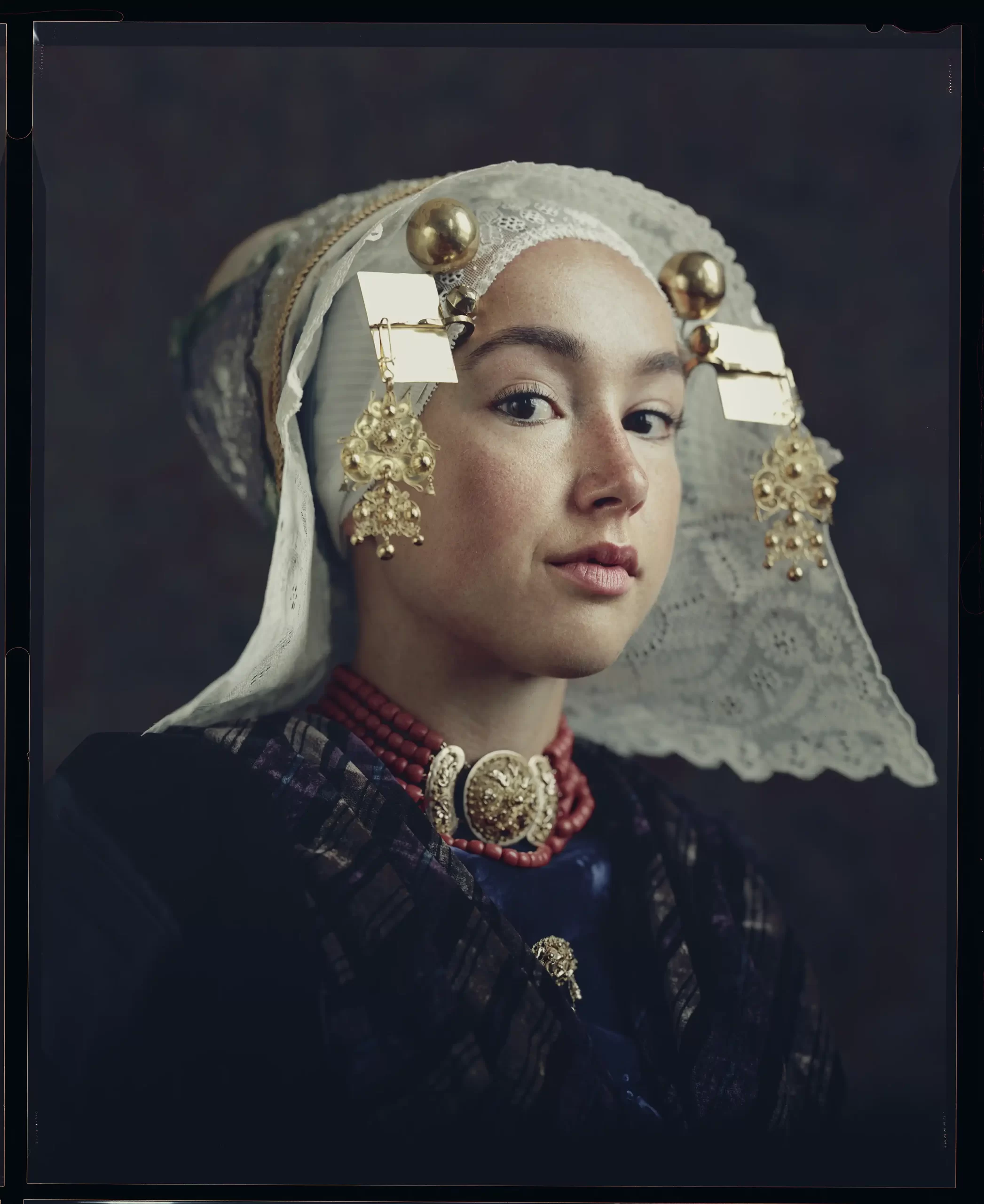
Aurel — in her early twenties — embodies a wider resurgence among younger generations reconnecting with their heritage.
In an ever-homogenous world that often prizes convenience and conformity, the ritual of this dress offers something more rooted: a sense of pride, identity, and belonging.
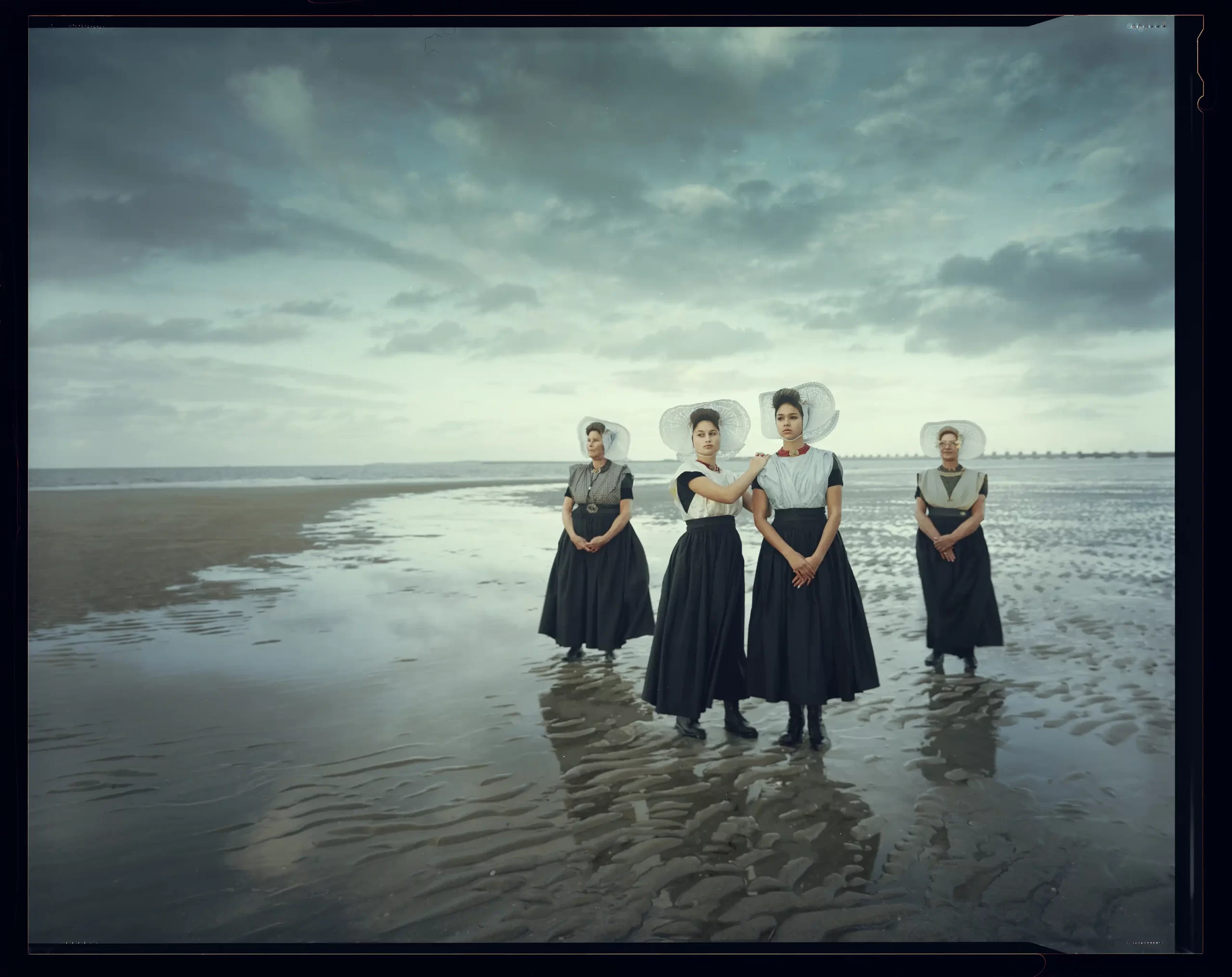
This story starts at the beginning of the pandemic. I’d just come back to The Netherlands from a trip to Mongolia and it was, what we say in Dutch an ‘Adult Lockdown’ – different from most countries because Holland is very free and so you are left to your own interpretation, to make an adult decision.
I always say in the Netherlands that when there’s a problem, we don’t close the curtains because we don’t have any. We sit in the window in our knickers smoking a joint saying, ‘this is life, come and get it.’ In the UK, when there’s a problem, we draw these heavy old curtains, we have cups of tea, we talk about the weather.
‘In Zeeland, particularly elaborate bonnets feature up to 800 finely pressed pleats’
So I was here, very few flights, a number of people said, if anybody’s going to suffer from the lockdown, you are, Jimmy, because you have to escape the whole time. Only I was at a place in life where I was beginning to realise what I’d been running away from, and that there wasn’t perhaps any need for that anymore. I was feeling quite peaceful.
‘this is life, come and get it.’
One day I was going through my emails – which I’m generally not allowed to do because I’m very impulsive and say yes to everything and everybody – but because there was nobody in the office I had free range of the inbox and I came across an email from a lady called Marike in Marke – which is an island just north of Amsterdam.
She introduces herself and asks if I’d ever visited Marke. Well, I’d been living in Amsterdam for 33 years at this point, but I hadn’t. She goes on: ‘well, it’s about time, because on our island, there are 900 of us and we have a very special klederdracht’ [clothing tradition].
I wrote back saying that I had no idea this was on my doorstep and that I was going to come to meet her. Only she said ‘no, the email is five years old. Nobody answered me.’ I explained that I wasn’t responsible for my emails – but she said ‘everybody denies their own responsibilities’ – all very Dutch. After about a month of back and forth she agreed that if I arrived with a bunch of flowers and an apology, then we could meet. So, I got on a bike, cycled out of Amsterdam across the causeway and arrived on the dike – and there she was, with her sisters, all dressed in Klederdracht from their village.
‘everybody denies their own responsibilities’
Over time, Marike introduced me to the community there. She explained how each waistcoat is passed from generation to generation – each weaving-in their story, not dissimilar to tattooing. She pointed out that what I’d been artistically aspiring to document around the world was on my doorstep in The Netherlands the whole time. She explained how the islands are quite private – and although they’re close to Amsterdam there is a fear that the customs would be interpreted as stuffy or backwards.
I was able to immerse myself in the community and, two years later, I produced a book called Between the Sea and the Sky which forms part of an exhibition currently on at Fotomuseum aan het Vrijthof, Maastricht (until 21 September, 2025).
‘What I create is simply an artistic symbiosis of how we see each other.’
When the exhibition opened, I organised a stunt where 900 of the people involved came to the main square, all wearing their traditional dress. It went viral domestically, and woke-up a whole new interest in who are we as the Dutch; a revived curiosity in our heritage. I don’t see myself as an anthropologist, ethnologist, photographer or journalist. What I create is simply an artistic symbiosis of how we see each other.
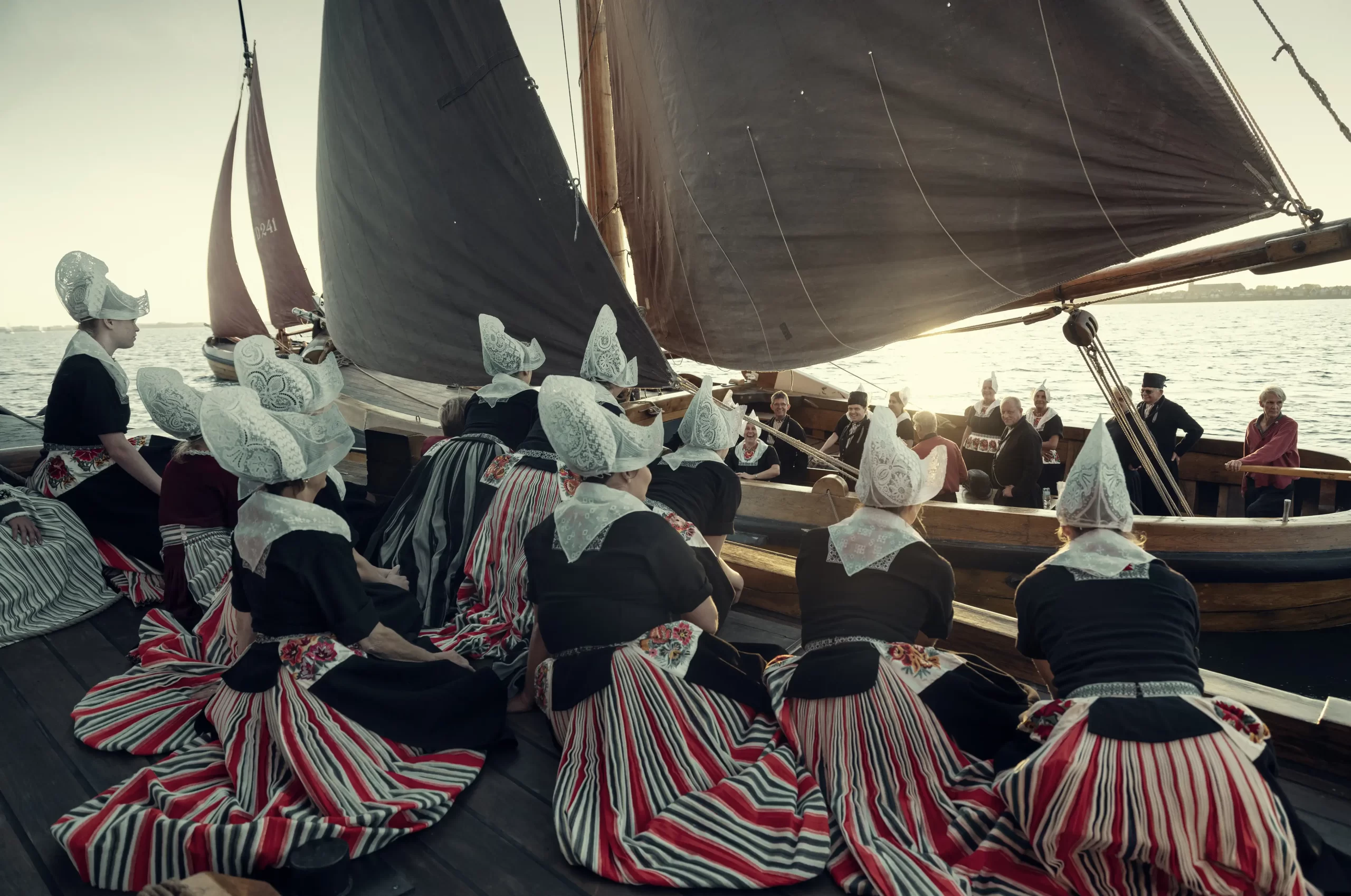
Zeeland, in the southwest of the Netherlands, is home to the country’s richest klederdracht [traditional dress].
Each former island and peninsula developed its own distinct sartorial code, with particularly elaborate bonnets featuring hundreds — sometimes up to 800 — finely pressed pleats. At the heart of it all lies ritual: the ritual of dressing, of community, and of gathering to sew and iron these intricate garments into being, again and again.
If you look across the Netherlands, a pattern emerges: coastal communities are rich in colour, the klederdracht traditional dress shaped by centuries of maritime trade.
It’s vivid and elaborate, influenced by imported fabrics and embellishments from Southeast Asia. Further inland, communities more isolated from trade — and often more religiously conservative — are marked by sober tones of grey and black, reflecting a puritanical lifestyle shaped by restraint rather than abundance.
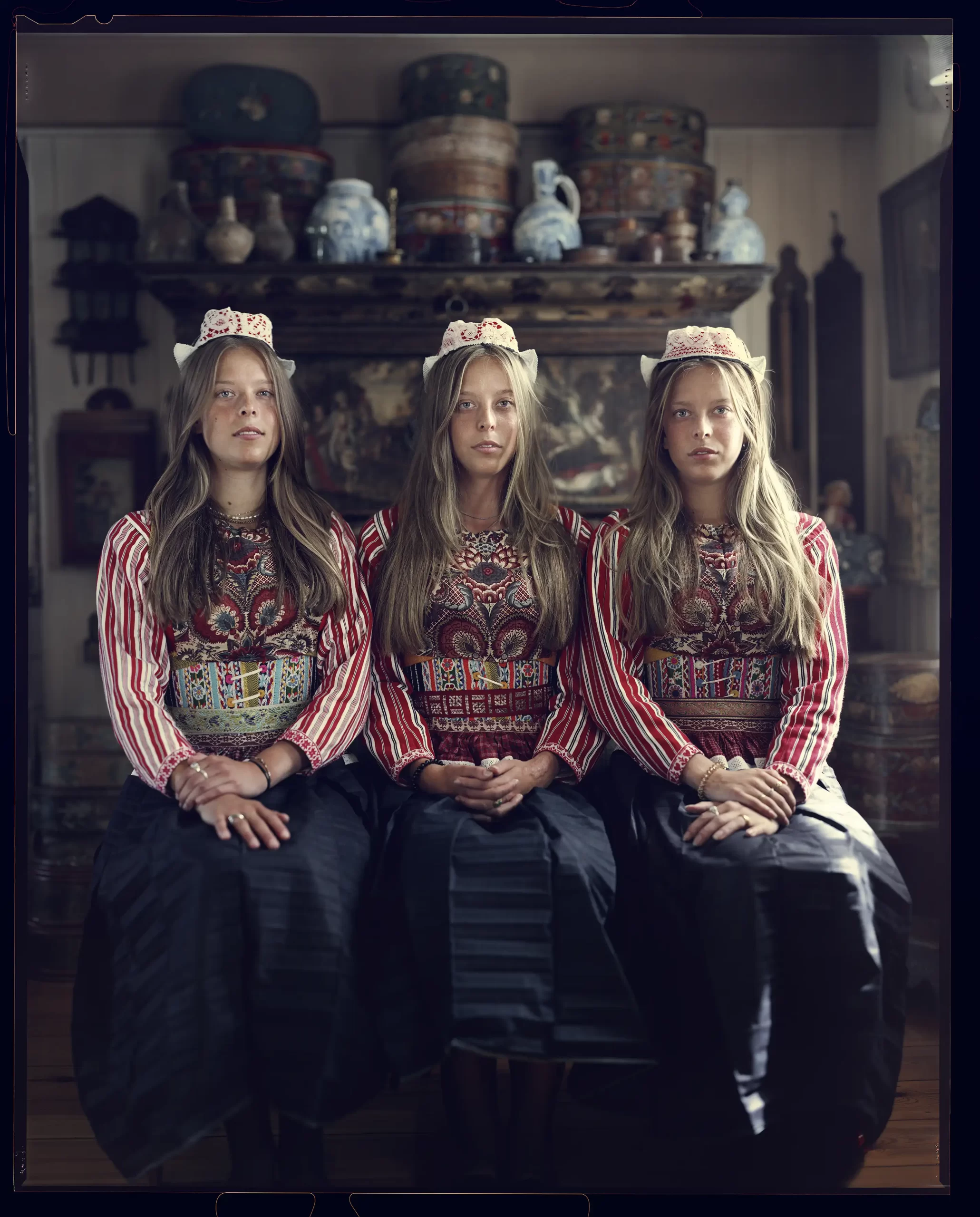
This image was taken during IJsbruiloft, an autumnal, folkloric celebration unique to the island. Outsiders are rarely invited, but I’ve been semi-adopted into the community — and on this occasion, I was introduced to three sisters, triplets. I photographed them inside one of the more traditional houses along the harbour. Like all my work, this image wasn’t spontaneous; it came from trust, conversation, and time.
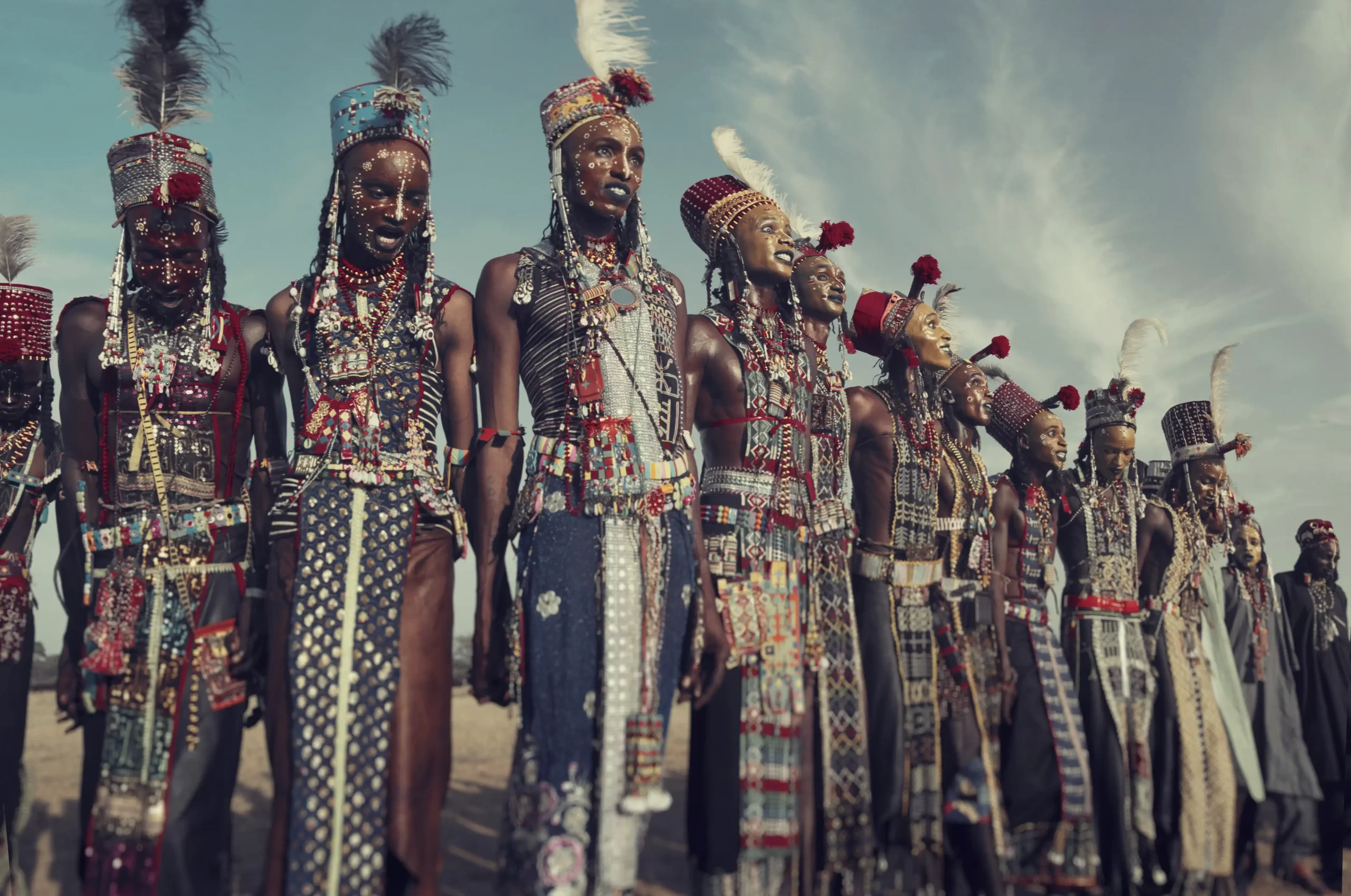
This image was taken in Chad among the Wodaabe, a nomadic subgroup of the Fulani people. Their traditions reveal a striking androgyny.
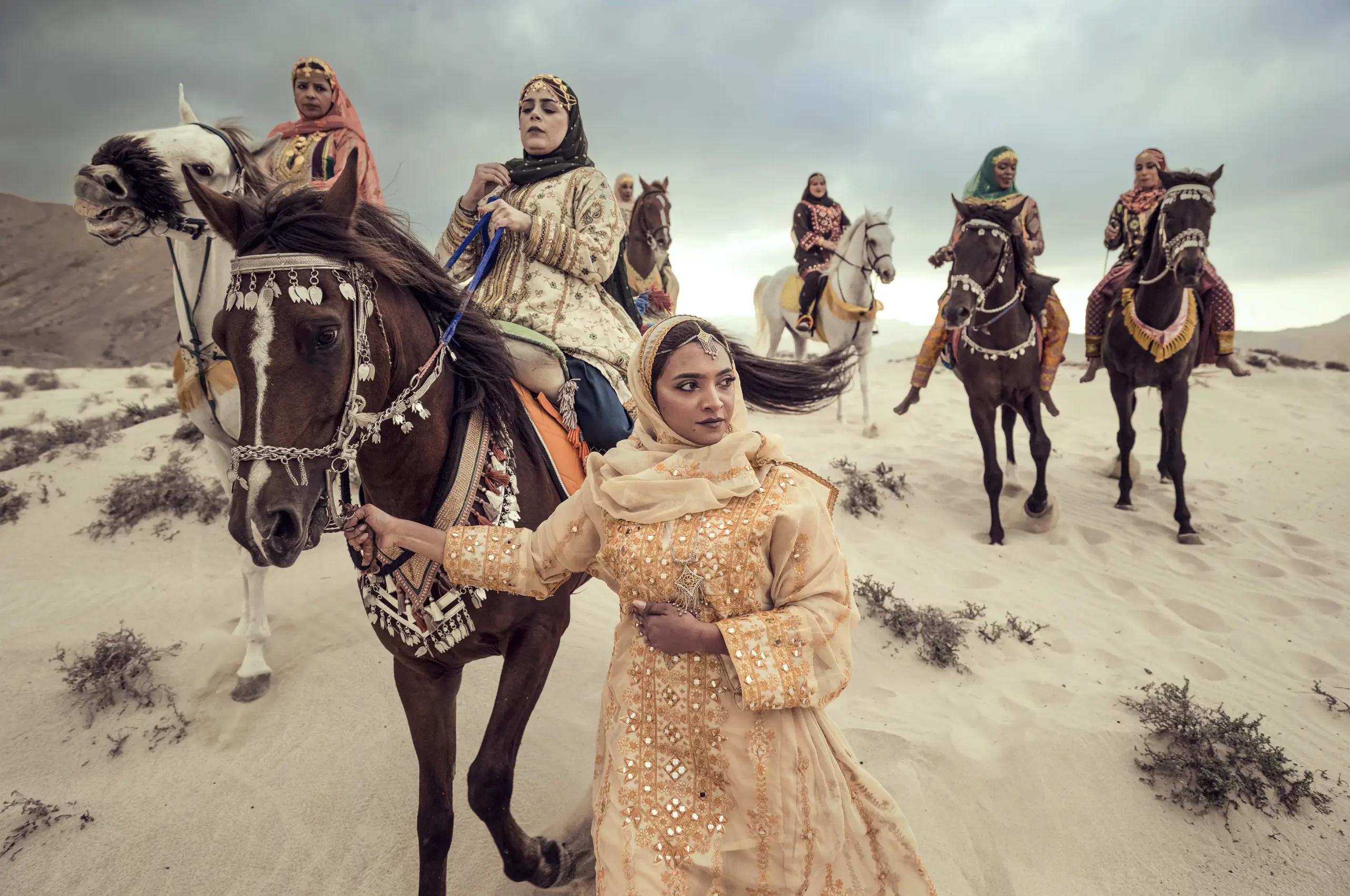
This image was shot on a handheld analogue camera in Oman, it’s a reportage shot, a bridge in the narrative.
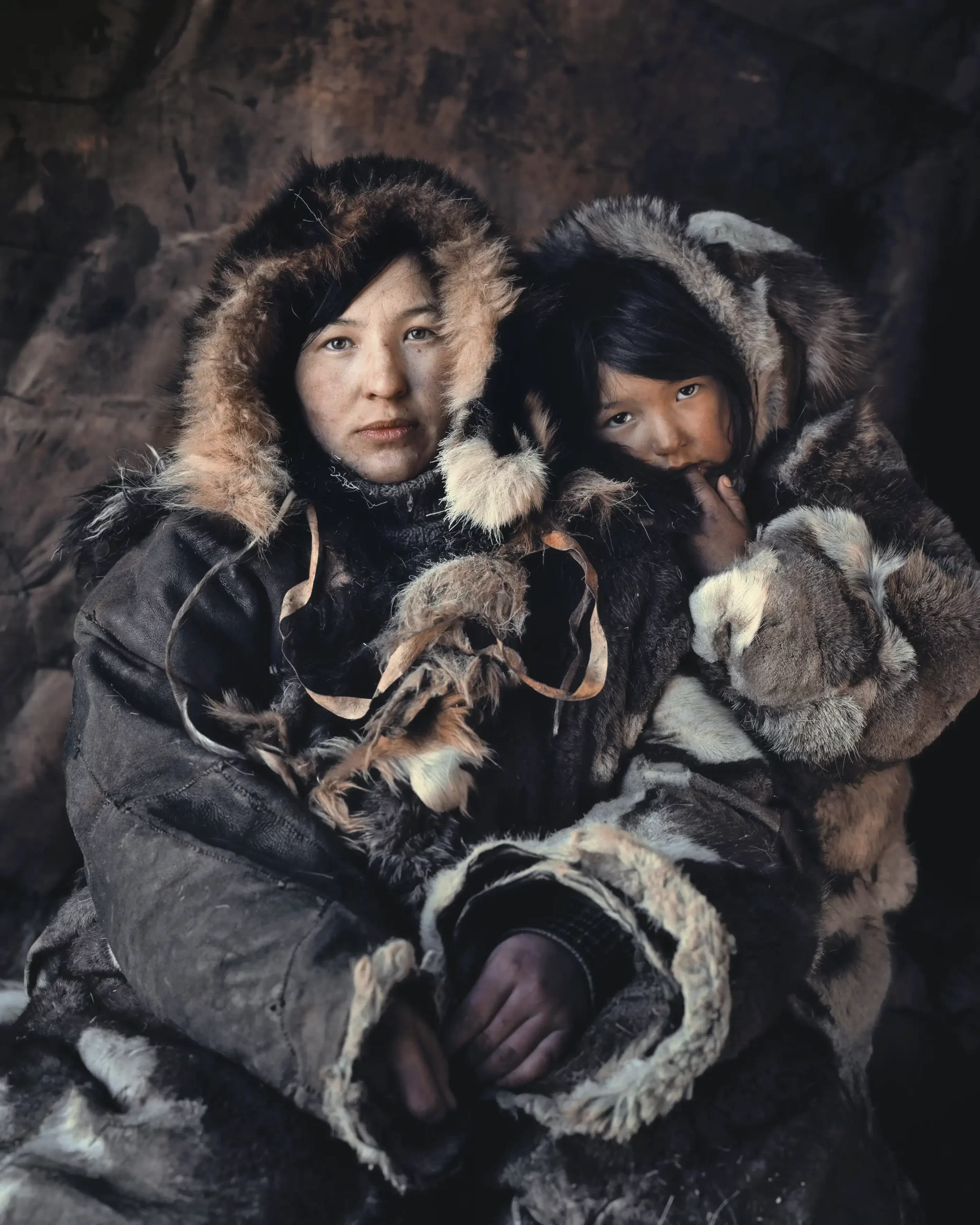
To reach Chukchi, in northeastern Siberia, you fly eight hours east from Moscow — to the nearest landmass to Alaska. Here, two nomadic brigades of around 30 people each herd thousands of reindeer across a territory the size of France. It’s one of the most remote places on earth.
This portrait, of a mother and daughter, was taken inside their Yaranga, a traditional tent. At –30 or –40°C, portraiture is a challenge — there’s little light, and even less stillness. I carefully staged the set-up using a torch and reflectors. Once ready, I called out, and someone opened the tent door just long enough to let in a sliver of daylight — two seconds for the exposure, before the cold poured in.
That communal effort — the willingness to let warmth escape, even briefly, for the sake of a picture — speaks to the intensity, generosity, and shared focus in that moment. It’s one of the most beautiful portraits I’ve taken — not just for the image, but for what it took to make it.